Legacy Surface Solutions
Pressure Washing Redcliffe
- Quick, Clean Results
- Skilled & Efficient
- High-Standard Finishes
Get a Free Quote
Contact Us
Thank you for contacting Legacy Surface Solutions.
We will get back to you as soon as possible.
Oops, there was an error sending your message.
Please try again later.

Grime Gone
Pressure Washing for Outdoor Surfaces
Built-up dirt often creeps in slowly until paths darken, walls stain and outdoor areas start to feel neglected. At Legacy Surface Solutions, we provide pressure washing across Redcliffe, Brisbane and the Moreton Bay region to remove years of build-up while protecting the surfaces underneath.
Based in Mango Hill QLD, we clean driveways, pathways, walls, fences and exterior features for both residential and commercial properties. Pressure washing is often completed before roof painting to remove dirt, moss and residue, and it can also prepare exterior surfaces before house painting for a cleaner, longer-lasting finish.
We adjust pressure levels to suit each surface, helping achieve consistent results without unnecessary damage. If your outdoor areas need a proper refresh, give us a call on 0422 286 388.
Need Help?
Frequently Asked Questions
Does pressure washing damage surfaces?
Pressure washing is safe when done correctly but using too much pressure on the wrong surface can cause marks or remove coatings. Softer materials like timber, older paint and some cladding need lower pressure and controlled technique. When matched properly, pressure washing lifts grime effectively without harming the surface underneath.
How often should pressure washing be done?
Most outdoor areas benefit from pressure washing once or twice a year, depending on weather, shade and how quickly dirt builds up. Surfaces exposed to moisture or tree cover may need cleaning more often. Regular washing helps prevent mould growth, improves appearance and keeps surfaces in better condition for longer.
Is pressure washing good for removing mould and mildew?
Pressure washing is highly effective at removing mould and mildew from hard surfaces because it breaks down the growth and clears away residue. Some surfaces may need a gentler setting or pre treatment to loosen stubborn areas. Regular cleaning helps prevent mould returning and keeps outdoor spaces healthier and easier to maintain.
Is pressure washing useful before painting or sealing?
Pressure washing plays an important role before painting or sealing exterior surfaces. Removing dirt, mould and loose material allows coatings to bond more evenly. Skipping this step often leads to peeling or uneven coverage later. Surfaces must dry fully after washing before further work begins, especially in humid conditions.
Pressure washing helps reveal surface damage that may need repair before painting. As part of preparation, it supports longer-lasting finishes and a more consistent result.
What should be avoided immediately after pressure washing?
After pressure washing, surfaces need time to dry fully before use or further treatment. Walking or driving on wet concrete can reintroduce dirt or leave marks. Painting, sealing or applying treatments too soon can trap moisture and affect adhesion.
Furniture and planters should stay off cleaned areas until surfaces are completely dry. In humid conditions, drying may take longer than expected. Allowing adequate drying time helps maintain the cleaned appearance and supports any follow-up work planned for the surface.
More Than Looks
Cleaning Before Damage Sets In
Pressure washing isn’t just about appearance. Dirt, mould and organic growth can trap moisture, leading to surface breakdown over time. Regular cleaning helps reduce long-term wear on concrete, brick and rendered finishes.
Our pressure washing also improves safety by reducing slippery build-up on paths and driveways. We assess each surface before cleaning, as older materials and jointing require a more measured approach. This makes pressure washing suitable for homes, rental properties and commercial spaces preparing for maintenance, painting or sale. Removing build-up early helps outdoor surfaces stay sound and easier to maintain.

Right Pressure Matters
Controlled Pressure Means Better Results
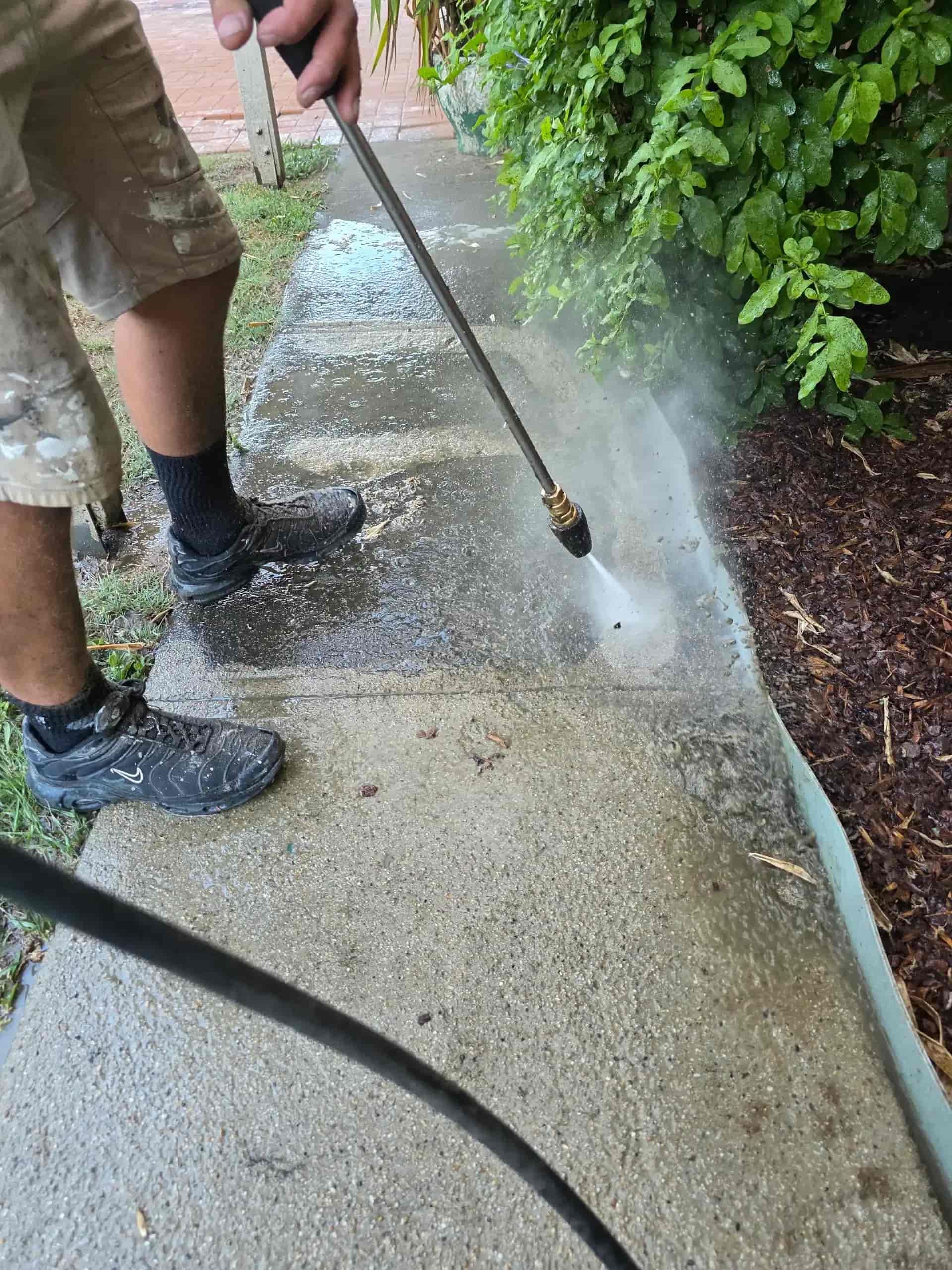
Effective pressure washing relies on control, not force. Using excessive pressure can etch concrete, loosen jointing or damage painted surfaces. Our process considers surface age, material and condition before cleaning begins.
Lower pressure settings suit delicate areas, while heavier build-up may require staged passes rather than a single blast. Water flow, nozzle choice and cleaning angle all affect the result.
Timing also matters, as shaded areas often hold moisture longer. This careful approach delivers consistent cleaning without unnecessary wear, helping outdoor surfaces look refreshed without shortening their lifespan.